French Windows in Aluminium Clad Wood
Two sashes, no center post, solid wood inside, aluminium outside.

What Are French Windows?
French windows are a pair of hinged sashes that meet in the middle of the opening. There's no fixed post between them, so when both leaves swing open you get one clear span of air and view. The proportions run tall and narrow, which is why they suit a living room wall that faces a garden, a dining room that opens to a patio, or an upper floor where the pair sits behind a Juliet balcony rail. The term gets used loosely now. Some listings call any grid pattern a French window, even when the unit is fixed glass.
The confusion comes from the door. A French door has a threshold at floor level and door hardware. A French window keeps a sill, so you step over it rather than through it, and it uses window hardware and a window locking system. Same two-leaf look, different job. If you're pricing a project, decide which one the opening actually needs before you send drawings, because the frame depth and the sill detail change with that call. The North American Fenestration Standard, published by AAMA, WDMA and CSA, is the document your spec reviewer will point to when they ask how the unit was rated: AAMA/WDMA/CSA 101/I.S.2/A440-26.
WANJIA Hiseng builds these as aluminium clad wood units, which means a solid wood interior frame wrapped in an aluminium exterior skin. That's the same platform as the casement, awning, sliding and single hung windows on this site. A buyer who wants the wood grain on the inside face and a finish that shrugs off rain on the outside gets both from one frame.
French Style Windows: What You're Actually Buying
Four things drive how a French window feels once it's hung.
Two Leaves, No Post
Both sashes operate. The meeting stile carries the lock, so the center of the opening stays clear when the pair is open. That's the whole point of the type, and it's the first thing to confirm on a drawing.
Wood Inside, Aluminium Out
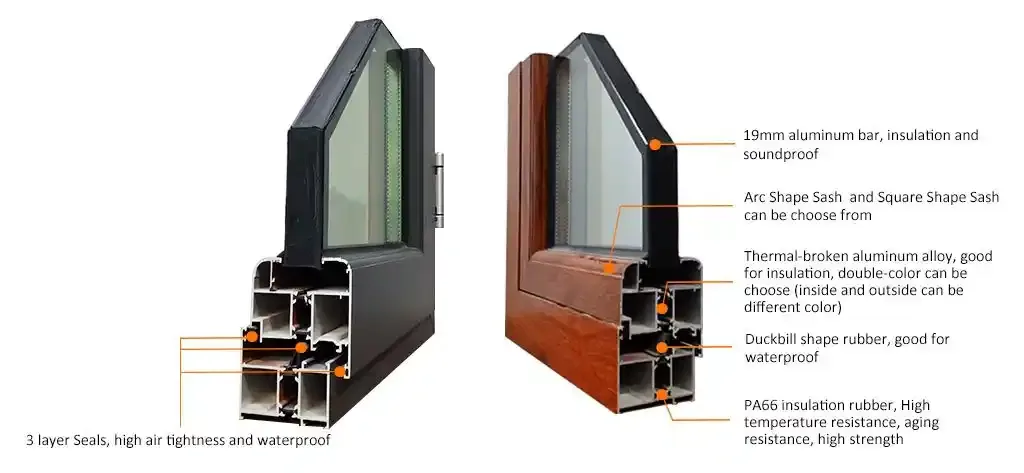
The interior is solid wood, the exterior is aluminium cladding on a 6063-T5 aluminium clad wood profile. The metal skin takes the weather and the UV, so the wood core doesn't need repainting every few seasons.
Multi-Point Locking
Casement and French-style units use German hardware from ROTO, SIEGENIA and CMECH with a multi-point locking system. More contact points along the sash means a tighter seal and less racking on a tall leaf.
Glass You Specify
Double or triple Low-E insulating glass on a 33 mm glazing notch, with an optional built-in grille or lattice. Triple glass is the heavier, quieter, better insulating build; it also costs more and weighs more on the hinges.
Aluminium French Windows: Specification
Values below describe this product family as built on the aluminium clad wood platform.
| Profile | 6063-T5 aluminium clad wood |
|---|---|
| Casement wall thickness | about 2.0 mm |
| Wood species | Burmese teak, black walnut, cherry, red rosewood |
| Glazing notch | 33 mm |
| Glass options | double or triple Low-E insulating glass |
| Hardware | ROTO, SIEGENIA, CMECH |
| Locking | multi-point locking system |
| Exterior finishes | powder coating, anodizing, wood-grain finishes |
| Insect screen | available |
Wood species, glass build-up, finish and hardware package are chosen per project, so the final specification depends on the configuration you order.
Related Window Types
The same platform, different opening.
Wood Clad Windows
The full wood clad range, with the wood species and finish options explained.
View details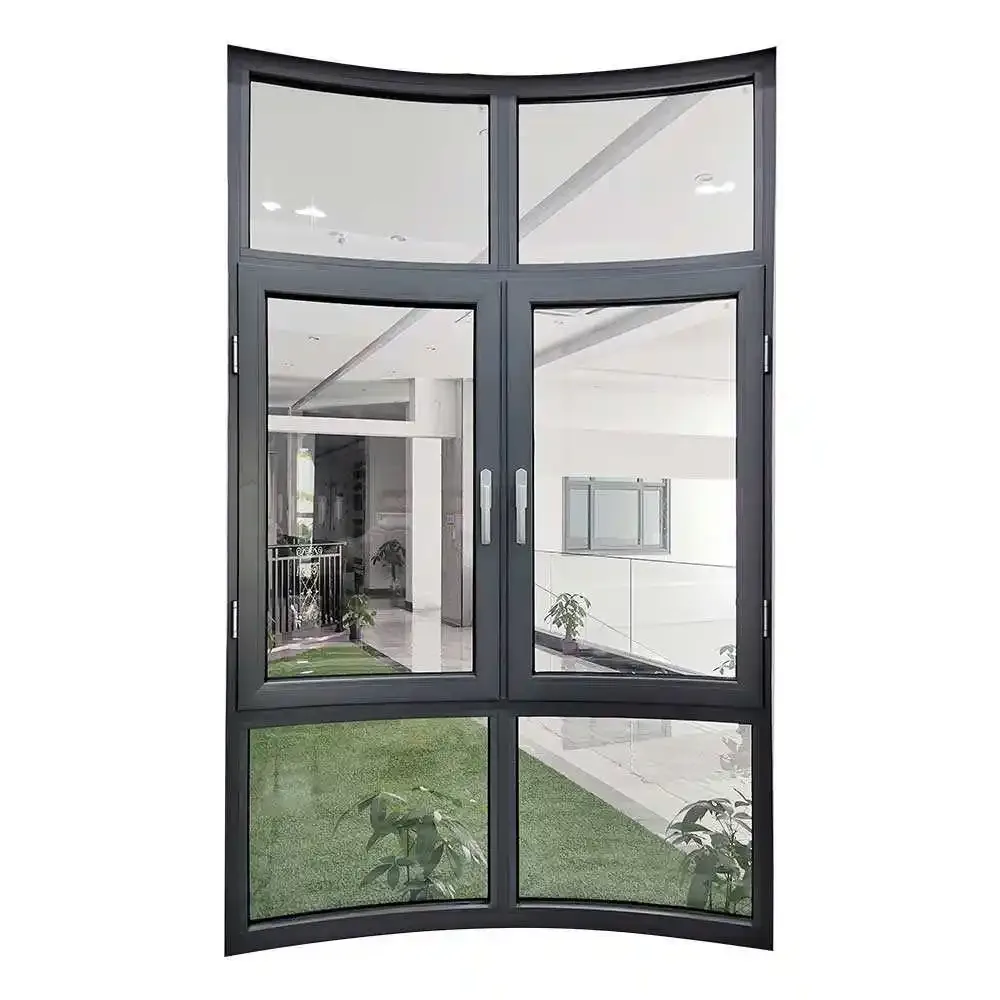
Aluminum Clad Wood Casement Windows
Single sash aluminium clad wood casement windows for openings that don't need a pair.
View details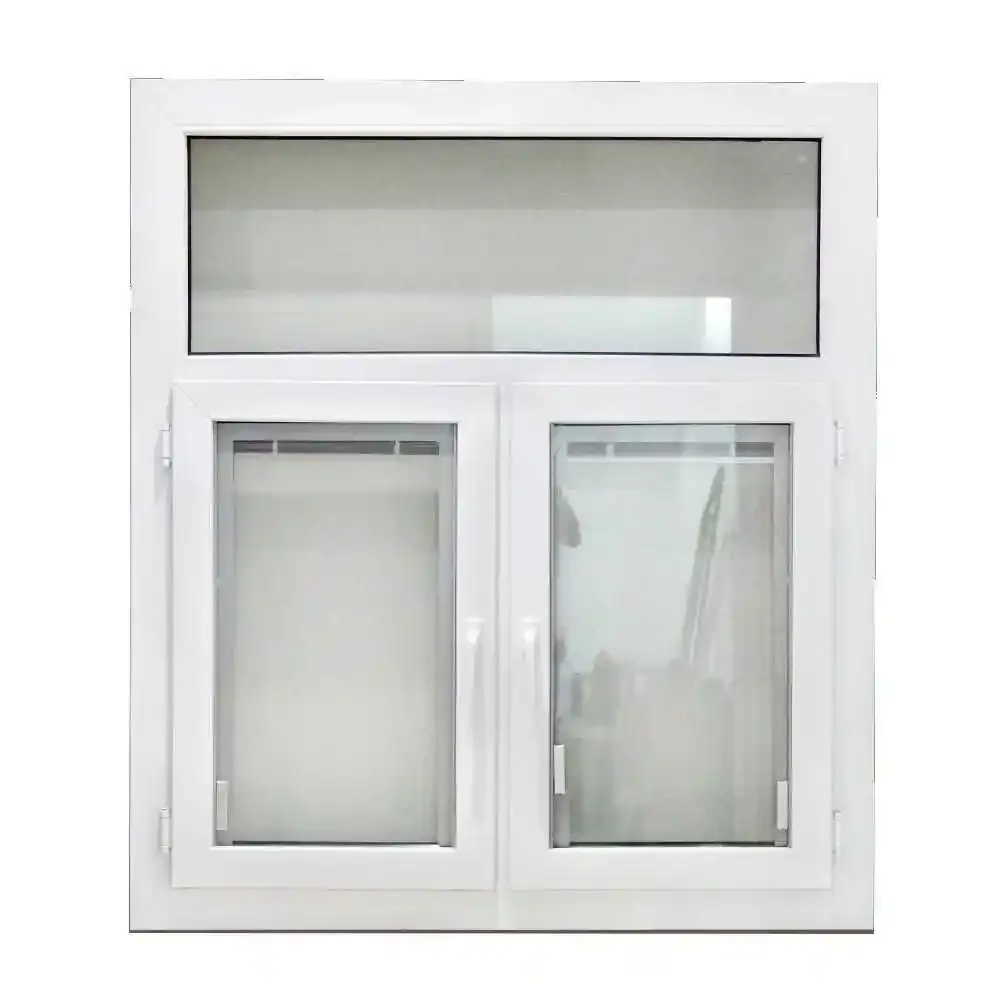
Aluminum Clad Wood Single Hung Windows
Aluminium clad wood single hung windows, with a fixed upper sash and a sliding lower one.
View details
Aluminum Clad Wood Sliding Windows
Aluminium clad wood sliding windows for wide openings where a swinging sash won't work.
View detailsChoosing Between French Windows and Casement Windows
Casement windows are one sash, side hinged, and they open outward or inward on a single frame. French windows are two sashes meeting in the middle with no fixed post between them. That's the difference, and it decides the opening. A narrow bedroom window wants a casement. A wide living room wall that should open up wants the pair, because two leaves give you roughly twice the clear opening for the same wall length. Tall and narrow proportions also read differently on a facade, which matters if the elevation is already drawn.
There's a cost angle too. Two operating sashes mean two sets of hinges, two handles and a longer lock run, so a French pair usually lands above a single casement of the same total width. If one leaf rarely opens, a casement plus a fixed lite does the same visual job for less. A buyer who needs the full width clear for furniture or a walk-through should stay with the pair. Also worth checking: the wall depth. The frame has to sit in the rough opening with room for flashing and trim, and deep cladding profiles eat into that.

Sizing and Ordering French Windows for Your Opening
- 01Measuring Your Rough Opening
You're buying a made-to-order unit, not a stock item. The number that matters is your rough opening, the framed hole in the wall. Measure the width at the top, middle and bottom. Measure the height at the left, center and right. Use the smallest of each set. That's the figure you send with your drawings. From there, we build the frame to fit, so the finished unit arrives ready to set. Replacing an existing pair? Measure the old frame's outside edges and note any trim or brickmould you plan to keep.
- 02Choosing Sill Height
Windows that open like doors give you the clear span of a door with the sill of a window. Plan around that trade-off. A low sill means more glass and a better view. It also means furniture placement and child safety need a second look. A higher sill keeps the proportions classic and leaves room for a radiator or a bench. Neither is wrong. Decide before the order goes to the factory, because sill height is part of the frame drawing.
- 03Hardware and Material Options
A large french window carries more weight and more wind load than a single sash. That's where the hardware package earns its keep. We use multi-point locking with German hardware from ROTO, SIEGENIA and CMECH on the aluminium clad wood platform, the same one used across our casement, awning, sliding and single hung windows. Specify double or triple Low-E glass on the 33 mm glazing notch. Interior wood species run Burmese teak, black walnut, cherry or red rosewood. Exterior finishes include powder coating, anodizing and wood-grain looks.
Questions buyers ask
What are French windows called?
In North America they're often listed as French casement windows or two-leaf casements. In the UK and Australia, French window usually means a glazed pair that reaches near floor level, which is closer to a French door. Suppliers also use french style windows as a catch-all. Ask for the elevation drawing rather than trusting the label.
What are the key differences between French windows and regular windows?
A regular casement has one operating sash. A French window has two, hinged on opposite jambs and meeting in the middle with no fixed mullion, so the center opens. They also run taller and narrower, and the lock sits on the meeting stile instead of the outer frame.
What are the disadvantages of French windows?
Two operating leaves cost more than one, and the meeting stile is the part that has to seal well, so hardware quality shows up here first. Tall leaves are heavy and can sag on cheap hinges. They also need clear floor space on the swing side. None of that rules the type out, it just means the hinge and lock spec matters more than the frame color.
What does French windows mean?
It describes a pair of hinged sashes with no center post, usually tall and narrow, often opening onto a garden or balcony. The name gets stretched to cover fixed units with grid patterns, which aren't the same thing. If both leaves swing, it's the real article.
Can I get a large french window with triple glass?
Yes. Triple Low-E insulating glass is an option on the 33 mm glazing notch. It's heavier than double glass, so the hinges and the frame need to be sized for that weight. Tell your supplier the glass build-up when you request the quote, because it affects the hardware package and the lead time. The exterior aluminium cladding stays the same either way.
Do french pane windows come with a screen?
An insect screen is available. On a two-leaf unit, you can have a screen on one or both operating sashes. Decide at the order stage, because the screen frame and the sash depth are drawn together. Retractable or fixed screens are both possible, depending on how you plan to use the opening.
Send Your Opening Dimensions
Share the rough opening and elevation, and we'll come back with a quote.