Security Windows for Homes
A secure window is a specification, not a separate product line.

What Actually Makes a Window Secure
Most break-ins don't start with a crowbar against the frame. They start at the glass or the lock. So when buyers ask about security windows for homes, the honest answer is that security is a system: frame, sash, locking hardware, glazing and a correct fit in the opening. Get one of those wrong and the rest doesn't matter much.
The ASTM F1233-21 standard is a useful reality check here. It's a test method for security glazing materials and systems, and it says something plain: success or failure depends on the tools used, the technique of the attacker, and the time available. It also notes the method is based on field experience, not laboratory analysis, so it can't promise absolute prevention. That's worth remembering before anyone sells you a bulletproof story.
What you can specify, and what we build, is a residential window with the weak points tightened up. Aluminum clad wood frames, multi-point locking, laminated glass where it counts. It won't stop a determined crew with power tools. It will make the window the slowest way into the house, which is the whole point.
Security Features on Our Windows
Four things do most of the work on a residential security window.
Multi-Point Locking
Our windows are built around a multi-point locking system. The sash locks at several points around the frame instead of one catch at the handle, so prying one corner doesn't pop the whole sash. Casement windows use ROTO, SIEGENIA and CMECH hardware.
Laminated Glass Option
Laminated glass holds together after impact rather than falling out in shards. It's available on the same platform as our standard double and triple glazing, so you can add it to the ground-floor openings and keep standard glass upstairs.
Solid Frame and Sash
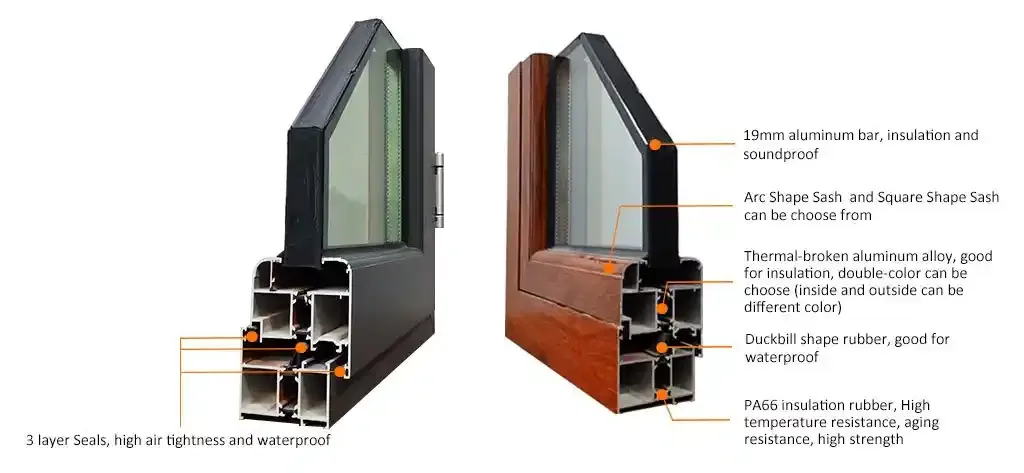
A lock is only as good as what it's screwed into. Our frames use a 6063-T5 aluminum clad wood profile, about 2.0 mm on casement and 1.5 mm on sliding. Solid wood interior, aluminum exterior cladding. No hollow feel when you push on it.
Made to Your Opening
A window that doesn't fit its opening is a security problem, not just a draft problem. We make to your rough opening in the size, shape and opening direction you specify, from drawing-based customization through to full customization.
Specifications
The values below describe our aluminum clad wood window platform. Exact configuration depends on the opening and the order.
| Profile | 6063-T5 aluminum clad wood |
|---|---|
| Casement profile thickness | about 2.0 mm |
| Sliding profile thickness | about 1.5 mm |
| Glazing notch | 33 mm |
| Glass options | double or triple glazing, Low-E, laminated available |
| Hardware, casement | ROTO, SIEGENIA, CMECH |
| Hardware, sliding and awning | CMECH, HOPPE, HOPO, KINLONG |
| Hardware, single-hung | American Caldwell handles |
| Locking | multi-point locking system |
Wood species, aluminum finish, glass build-up and hardware brand all depend on the specific configuration you order.
Related Window Types
Security is a configuration you apply to a window type, so start with the opening style you actually need.
Wood Clad Windows
The base platform: solid wood inside, aluminum cladding outside, made to your opening.
View details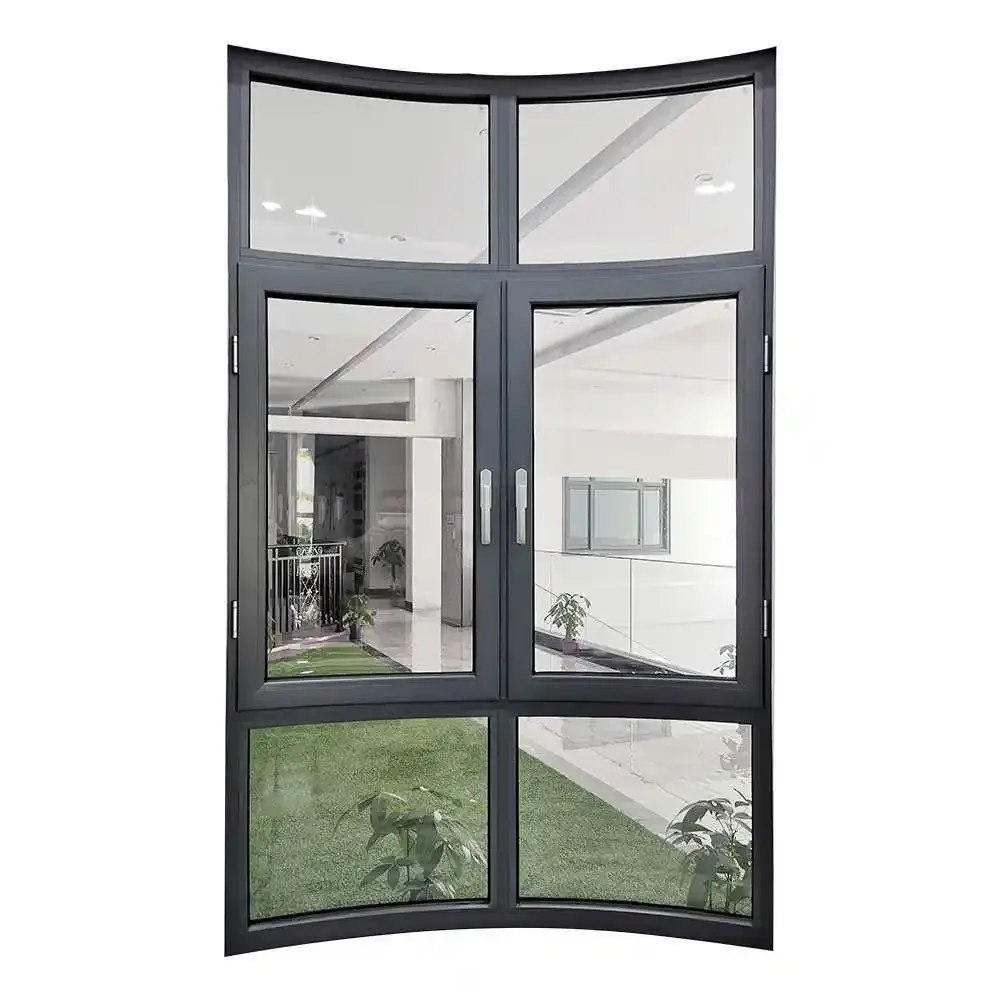
Aluminum Clad Wood Casement Windows
Hinged on the side, cranked or pushed outward, with ROTO, SIEGENIA or CMECH multi-point hardware.
View details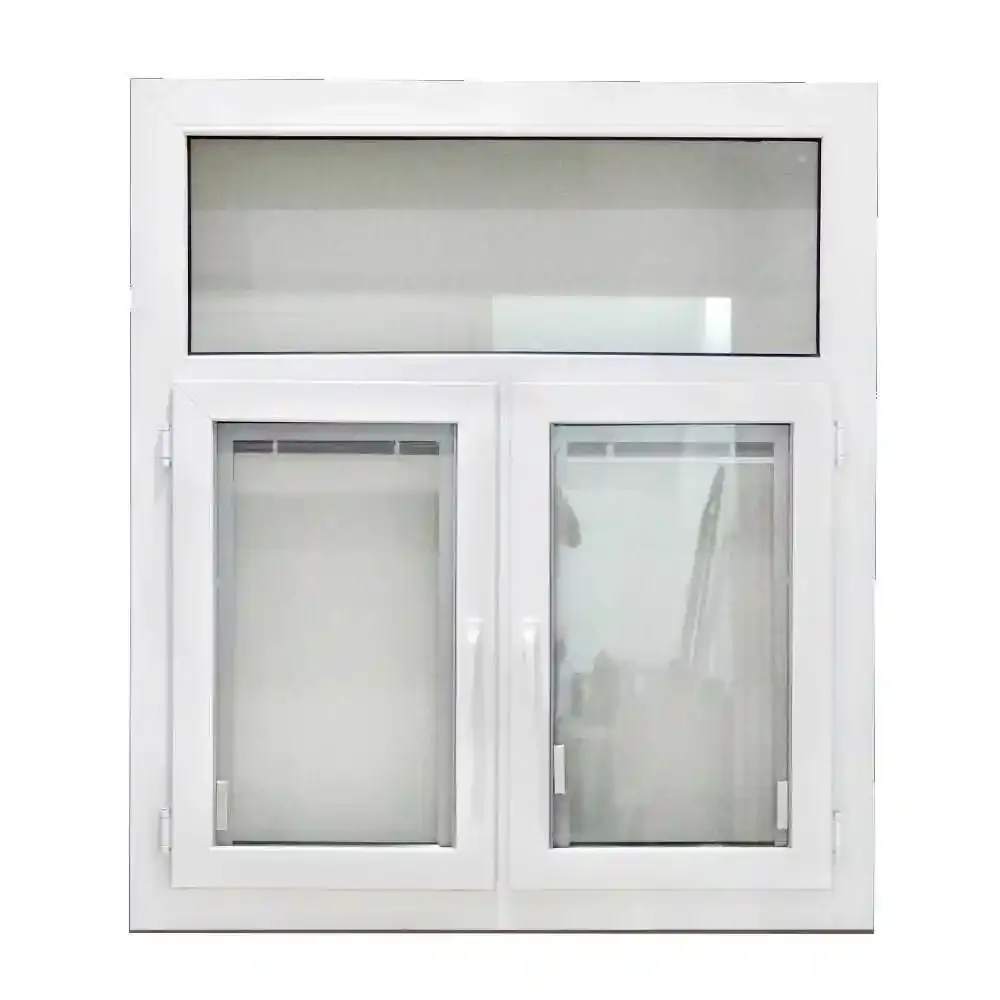
Aluminum Clad Wood Single Hung Windows
Vertical sliding sash with a tilt-in top for cleaning, fitted with American Caldwell handles.
View details
Aluminum Clad Wood Sliding Windows
Side-to-side panels on a track, useful where a swinging sash would block a walkway.
View detailsChoosing the Right Security Level
Think about the house, not the catalog. A ground-floor bedroom window behind a hedge needs more than a third-floor window over a driveway. A buyer who puts laminated glass and multi-point locking on the three or four reachable openings usually gets most of the benefit for a fraction of the cost of doing every window. The upper floor can stay on standard double glazing with Low-E and nobody sleeping there is worse off.
The other half of the job is the installation. A window is only as secure as the fasteners and the shimmed, square fit in the rough opening. If the frame racks or the gap is packed with something soft, the locking points never line up properly and the sash can be worked loose. Ask any supplier what the window is designed to be anchored into, and check that against your wall assembly before you order. The North American Fenestration Standard, published by AAMA, WDMA and CSA, is the document your builder or code official will point to for performance ratings, so it's worth knowing the name.

What You Can Control Before the Window Arrives
- 01Preparing the Rough Opening
If you want strong windows, the spec sheet only gets you halfway. The other half is the opening you're putting them in. A frame that's racked, out of square, or shimmed with something soft will let a sash move no matter how good the lock is. Measure the rough opening at three points, top, middle and bottom, and build to the smallest number. A half inch of play is normal, but a twisted opening is not something a window can fix.
- 02Anchoring and Wall Assembly
Then think about what the window is anchored into. Locking points only work when the frame stays where it was set. If your wall assembly is sheathing over studs, say so when you order, because the anchor type and spacing change. On a remodel where the old frame stays, check that the existing opening is still plumb before you measure. A window that fits tight and square is a stronger window than the same unit dropped into a sloppy hole.
- 03Choosing Which Openings Need Heavier Spec
Finally, decide which openings actually need the heavier spec. Reachable ground-floor windows and any door-adjacent unit are where laminated glass and multi-point locking earn their cost. Upper floors over a driveway or a steep drop usually don't need the same build. Spend the money where a person could stand.
Questions buyers ask
How do I burglar-proof my windows?
Start with the locks and the glass. Multi-point locking hardware makes the sash much harder to pry, and laminated glass holds together instead of breaking out. Then look at the openings someone can actually reach from the ground. A supplier can tell you which locking points and glass build-ups are available on the window you're buying. No window stops a determined intruder with power tools, but you can make yours the slow option.
What is the best security for house windows?
For most homes, the best value is a layered approach: a solid frame, multi-point locking, and laminated glass on the reachable openings. High security windows don't have to be a separate product line. If you're comparing suppliers, ask what locking hardware they use, whether laminated glass is available on the same frame, and how the window is anchored in the opening. Those three answers tell you more than a brochure.
What type of window is best for security?
Casement and awning windows tend to be the strongest choice because the sash locks into the frame at several points and there's no track to lift a panel out of. Sliding windows can be secured well too, with the right lock, but the track is a detail worth asking about. Single-hung windows work if the upper sash is fixed or locked. Fixed windows are the most secure simply because they don't open.
How much do security windows for a home cost?
We don't publish prices, because cost depends on size, glass build-up, hardware and finish. Send us your opening sizes and what you want on each one, and we'll quote within 3 hours on average after receiving project details. Minimum order is 2 square meters, and sample orders are supported before you commit to a bulk purchase.
Do I need laminated glass on every window to have strong windows?
No. Laminated glass is an option on our aluminum clad wood platform, not a requirement. Most buyers put it on the reachable openings, ground floor and any window near a door or a flat roof, and keep standard double or triple glazing upstairs. The frame, the multi-point locking and a square fit do as much work as the glazing.
What should I send with an order for security windows for homes?
Send your rough opening sizes, measured at three points and taken to the smallest, plus the opening direction and the wall assembly the window anchors into. If you have a drawing, we work from it. Drawing-based and full customization are both available, and you can add laminated glass and multi-point locking to any casement, awning, single-hung or sliding unit.
Send Us Your Opening Sizes
Tell us the openings and the security level you want, and we'll quote.