Vertical Windows: Choosing the Opening Type
Tall, narrow openings need the right sash. Here is how to pick one.

What Counts as a Vertical Window
A vertical window is taller than it is wide. That proportion, not the material, defines the category. A 30 by 72 inch unit is a vertical window whether it's aluminum clad wood, vinyl or bare aluminum. It can be fixed, casement, awning or single-hung. The shape is the point, and the shape is what makes the hardware and wind-load questions different from a short, wide unit.
This page covers tall formats and how to choose the opening type for them. The single-hung window page covers the sash itself: how the lower sash slides up, how it tilts in for cleaning, and what Caldwell handles feel like. If you already know you want a single-hung, start there. If you're still deciding between a fixed lite, an outward casement and a vertical slider for a tall opening, stay here.
One thing worth saying early: a tall sash is heavier and catches more wind than a short one. That's not a sales problem, it's a hardware and profile problem. The opening type you pick decides how much of that load the frame has to carry. Under the 2021 International Residential Code R310.7.1, an existing operable window shall provide a minimum net clear opening of 4 square feet (0.38 m2) with a minimum net clear opening height of 22 inches (559 mm), as shown in this code section.
What Matters on a Tall Unit
Four things buyers check before they sign off on a tall vertical window.
Opening type first
Fixed for the tall upper lite, operable below, is the usual way to get height without heavy hardware. Casement gives full-height ventilation but the sash weight and wind load grow with height. Awning suits a tall unit above furniture or a walkway.
Clad wood build
Solid wood interior, aluminum exterior cladding, 6063-T5 aluminum clad wood profile. Casement profile thickness runs about 2.0 mm, sliding about 1.5 mm. Wood species include American oak, Burmese teak, black walnut, cherry and rosewood.
Glass and notch
Double, triple and Low-E glass options sit in a 33 mm glass notch. Built-in grille or lattice is available if the elevation calls for divided lites. Triple glass is the option most buyers ask about on north-facing tall units.
Hardware and locks
Casement units use ROTO, SIEGENIA or CMECH hardware. Awning and sliding units use CMECH, HOPPE, HOPO or KINLONG. Single-hung units use American Caldwell handles. A multi-point locking system is standard across the range.
Vertical Window Specifications
These are the build options that apply to tall, vertically proportioned units.
| Profile | 6063-T5 aluminum clad wood |
|---|---|
| Casement profile thickness | about 2.0 mm |
| Sliding profile thickness | about 1.5 mm |
| Glass notch | 33 mm |
| Glass options | double, triple, Low-E |
| Wood species | American oak, Burmese teak, black walnut, cherry, rosewood |
| Casement hardware | ROTO, SIEGENIA, CMECH |
| Awning and sliding hardware | CMECH, HOPPE, HOPO, KINLONG |
| Single-hung handles | American Caldwell |
Exact combinations depend on the opening size, the opening type and the finish you choose, so confirm the configuration before ordering.
Related Window Types
Four pages that pick up where this one leaves off.
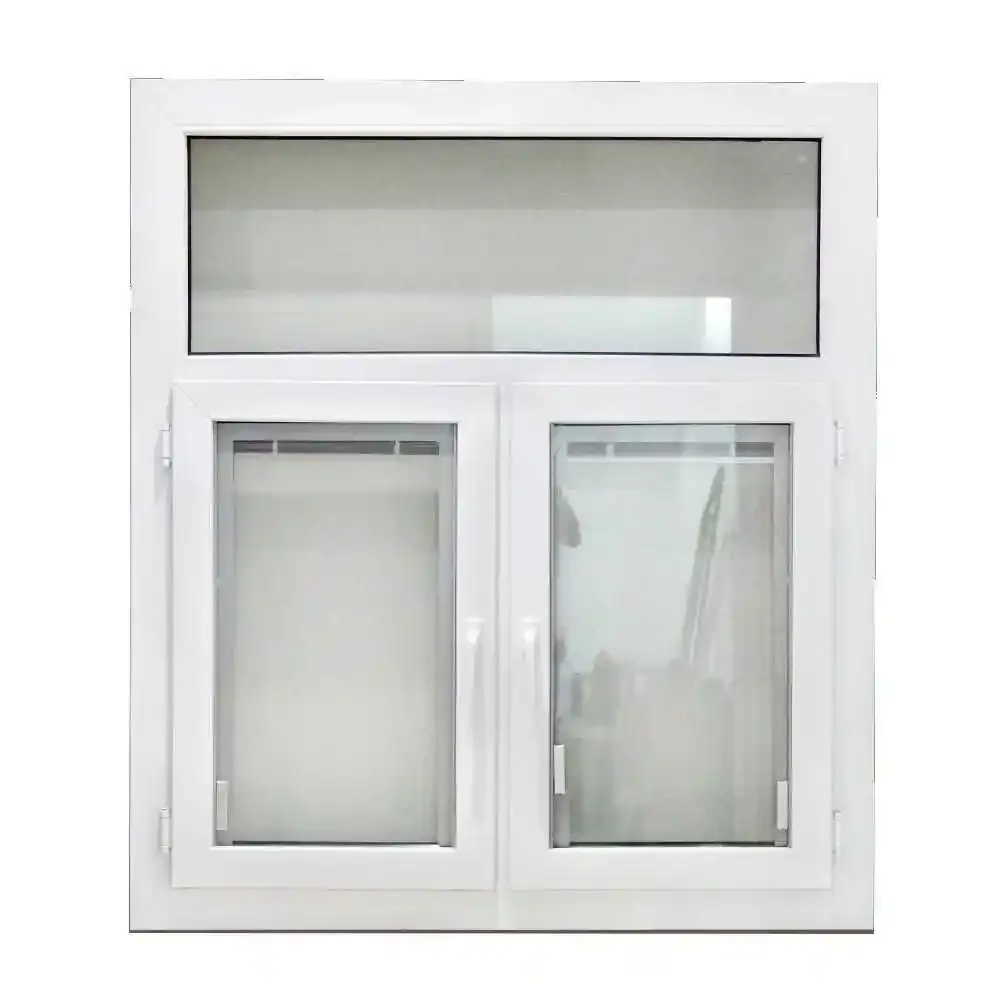
Aluminum Clad Wood Single Hung Windows
Aluminum clad wood single hung windows, with a vertical sliding sash and tilt-in cleaning.
View details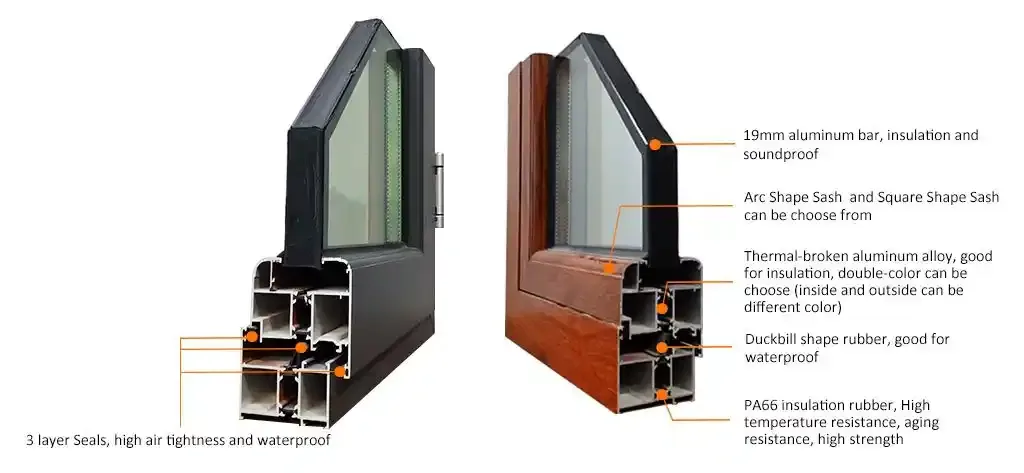
Wood Clad Windows
Wood clad windows: solid wood inside, aluminum cladding outside, same platform.
View details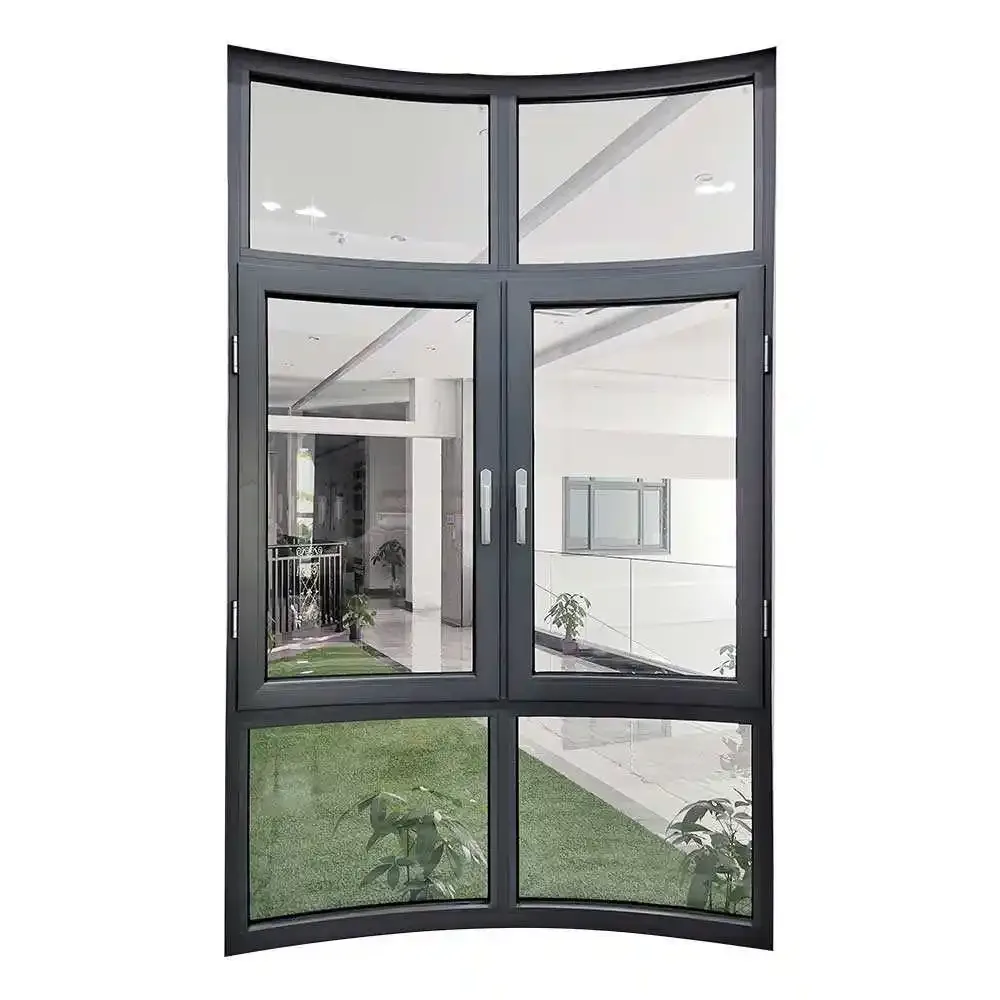
Aluminum Clad Wood Casement Windows
Aluminum clad wood casement windows that crank outward for full-height ventilation.
View details
Aluminum Clad Wood Sliding Windows
Aluminum clad wood sliding windows for wide openings and low-sill rooms.
View detailsChoosing the Opening Type for a Tall Window
Start with the wall, not the catalog. A tall opening on a second-floor gable usually wants a fixed lite up top and something operable below. Fixed glass is cheaper, lighter and tighter than any sash, and it lets you push the height without adding hardware that has to fight gravity. If the room needs egress, the operable part has to meet the code for your jurisdiction. The 2021 International Residential Code R310.7.1, published by the International Code Council, sets a minimum net clear opening of 4 square feet with a minimum net clear opening height of 22 inches for an existing operable window. Many local amendments ask for more, so check with your inspector before you fix the sill height.
When the whole unit has to open, casement is the usual answer on a tall, narrow sash. It swings outward, so it doesn't eat floor space, and the sash seals against the frame with a multi-point lock. The trade-off is wind. A tall casement presents a long lever to the hinge side, and the hardware has to be sized for that. That's why casement hardware brands like ROTO and SIEGENIA matter more on a 72 inch sash than on a 36 inch one. Awning is the other option: hinged at the top, pushing outward, useful where a tall unit sits above a counter, a bench or a walkway. Single-hung keeps the sash inside the frame plane, which is the right call when there's no exterior swing space at all.

Questions buyers ask
What is a vertical window called?
Most of the trade just says vertical window, or vertical opening window when they mean the operable version. A vertical slider is a single-hung or double-hung, depending on whether one sash or both move. A tall fixed unit is a fixed lite. The name follows the operation, not the shape.
Do they make window units for vertical windows?
Yes. We build aluminum clad wood windows to the rough opening, so a tall, narrow unit is a normal order, not a special. Full customization is available, with a minimum order of 2 square meters. Send the opening size, opening type, glass and finish, and we quote from the project details.
What are windows that open upwards called?
A window that opens upwards is usually an awning window, hinged at the top and pushed outward. A single-hung window also opens upwards in the sense that the lower sash slides up inside the frame. The two are different mechanisms, and they solve different problems on a tall wall.
Can you put a vertical window horizontally?
Physically you can rotate a unit, but the operation changes. A casement hinge that was designed for a tall sash now carries a wide one, and drainage paths in the frame assume a specific orientation. If you need a wide, short opening, order a unit built for that proportion instead of turning a tall one on its side.
Send Us Your Opening Size
Tell us the rough opening and the opening type, and we'll quote within 3 hours.